World leading specialists in ClO2 application technology
For many years, Chlorine has been the most commonly used chemical for water treatment due to its ability to effectively kill bacteria and viruses.
However, ClO2 (Chlorine dioxide) has emerged as a popular alternative in recent years due to its unique and superior properties.
Chlorine dioxide is a powerful and efficient oxidising agent that can effectively eliminate waterborne pathogens, including viruses, bacteria, and parasites, without producing harmful by-products such as trihalomethanes (THMs) and haloacetic acids (HAAs).
Our team has conducted extensive research and compiled a list of some of the significant benefits of ClO2, which make it a better option for water treatment needs.
Higher yield & greater cost efficiencies
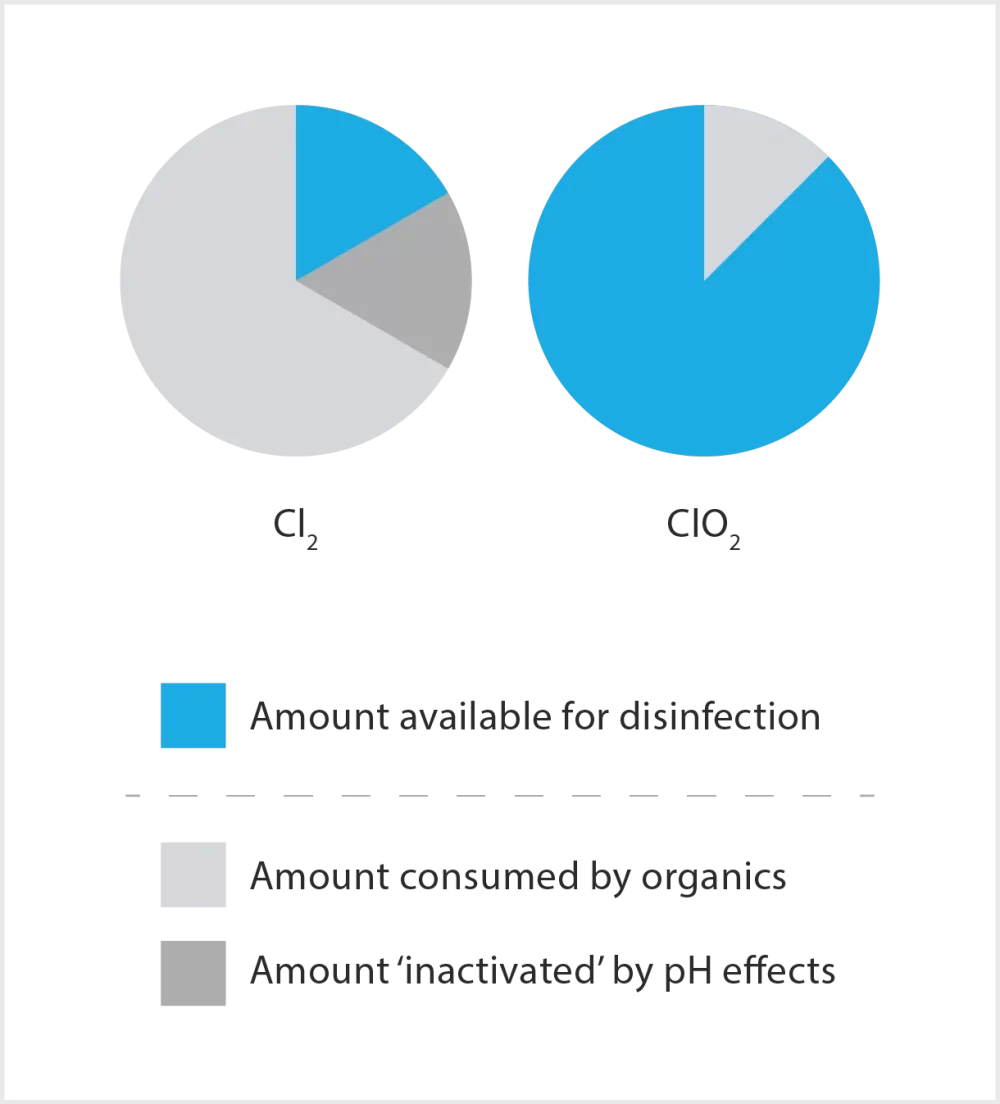
Chlorine Dioxide has a higher oxidation capacity, and a lower oxidation strength than most species of chlorine, making it at least 2.6 times more powerful per ppm according to WHO CT values.
No carcinogenic by-products & no bad taste occurrences in water
Chlorine Dioxide acts only by oxidation and does not combine with organic compounds to form environmentally hazardous by-products such as Trihalomethane and other chlorinated organic compounds that have been listed as potentially carcinogenic.
Less corrosive
Chlorine Dioxide has a lower oxidation potential and does not hydrolyse to form an acid, and therefore is less corrosive.
Works over a wide pH
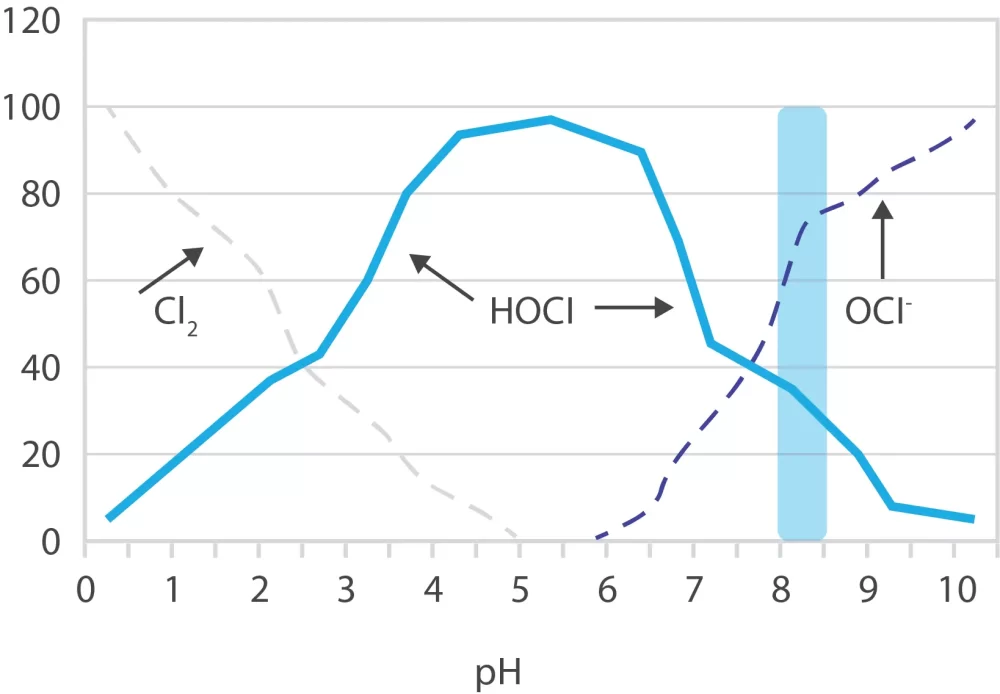
The effectiveness of chlorine is very pH dependent, and is almost ineffective above pH8. Chlorine Dioxide is effective at all pH’s below 12.
Overall, ClO2 offers a safer and more effective solution for water treatment needs and is an excellent choice for those who prioritise safety and efficiency.